
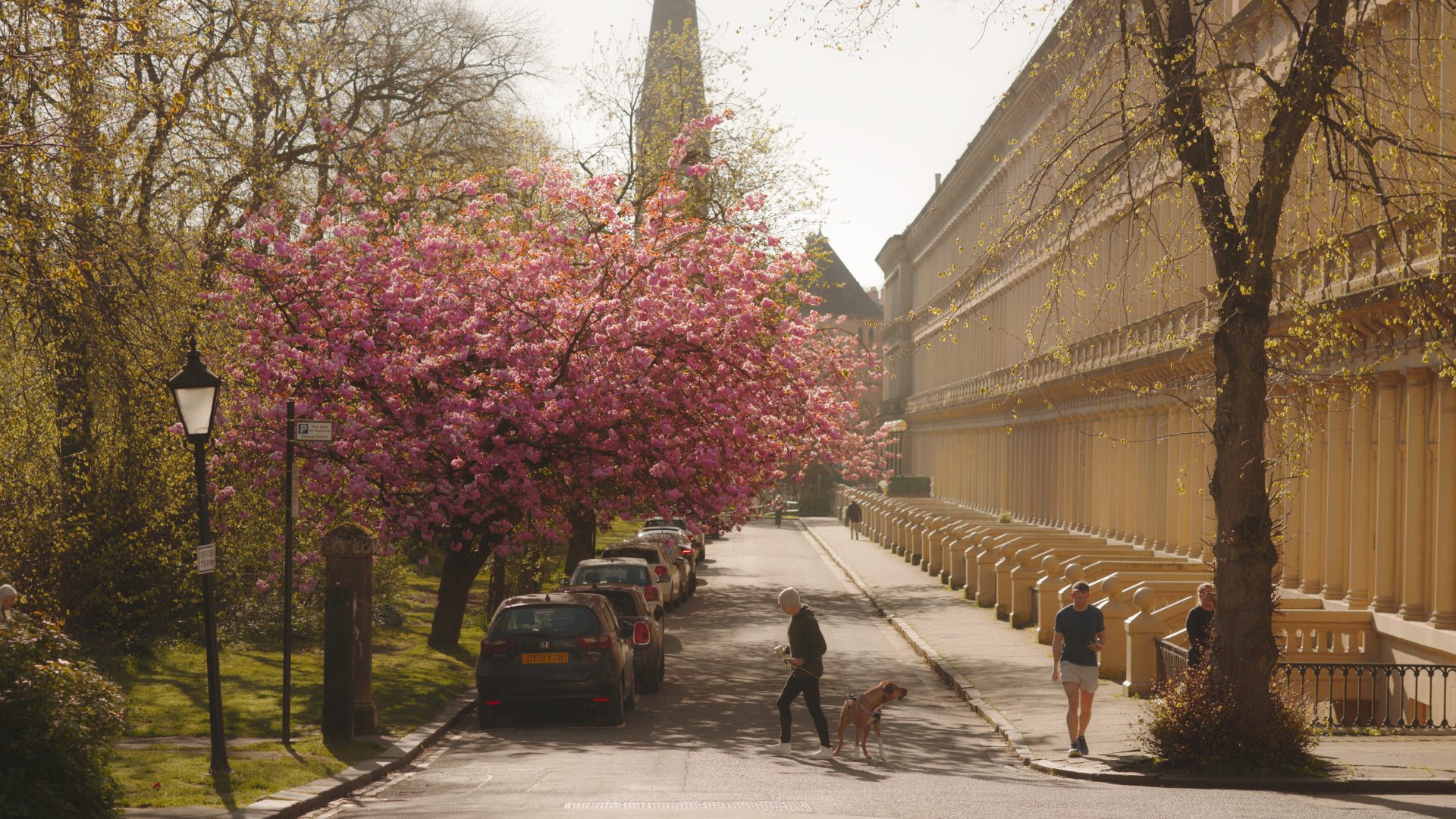
Glasgow in Bloom: The West End Cherry Blossoms
As their bloom period comes to an end for another year, we’ve been reminding ourselves of the beautiful cherry blossoms dotted about the West End of Glasgow in recent weeks. Neil has enjoyed capturing them in all their glory, in between shooting our clients’ homes. As well as admiring them, we’ve also been interested to read a bit more about their history, which we’ll share with you here.
Where do they come from?
Cherry blossoms (sakura) are native mainly to East Asia and became deeply tied to Japanese culture. They symbolise impermanence and renewal because they bloom only briefly each spring (with the peak viewing period being late April-mid-May here in Glasgow).
While cherry blossoms are often associated with Japan, Glasgow has its own historical relationship with these iconic trees, one rooted in Victorian horticulture, post-war friendship, and the city’s ability to nurture green spaces.
What brought them to Glasgow?
In Scotland (and the wider UK), cherry blossoms arrived largely during the Victorian era (mid-late 19th century), imported when Britain and the rest of Europe became fascinated with Japanese art, design, and gardens (a wider movement sometimes known as ‘Japonisme’).
Here in Glasgow, the Botanic Gardens played an important role in introducing and preserving exotic species. Botanists and gardeners exchanged seeds and specimens with institutions around the world, helping ornamental cherries become more widespread across Scotland. It’s also thanks to influential Scottish artists such as The Glasgow Boys, who, seen to represent the beginnings of modernism in Scottish painting, brought back ideas, objects, and plant influences from Japan. As a major industrial city, Glasgow was able to adopt the cherry blossom trend, and trees were planted in parks such as Kelvingrove and Glasgow Green; parks designed as statements of civic pride.
Their place in Glasgow today
Many of the trees seen today aren’t Victorian originals. After World War II, cherry blossoms took on additional symbolic meaning across Europe. In many cities, flowering trees were planted as emblems of peace, hope and renewal.
Around this time (1950s-1970s), Glasgow went through urban redevelopment, rebuilding and rebranding itself from an industrial powerhouse into a cultural and creative city. Green spaces became central to this transformation, and blossoms became part of the city’s softer public image. Local authorities planted cherry trees along streets, in housing areas and in parks, which is why you’ll now find them scattered across the city, rather than concentrated in one place.
Surprisingly, Glasgow’s climate suits ornamental cherry blossoms well. Although, as we know, Scotland’s weather can be unpredictable, the cooler spring temperatures often extend the blossom season slightly longer than in warmer parts of Britain.
In recent years, cherry blossoms have become a major seasonal attraction in Glasgow. Social media has transformed blossom viewing into an annual ritual, with photographs from hotspots across the city being shared by its residents and visitors, and with communities celebrating the arrival of colour and vibrance after the long Scottish winter.
Where are the best places to see them?
If you’re spending a day in the West End of Glasgow in April-May, we’d recommend visiting Kelvingrove Park, Glasgow Botanic Gardens, Victoria Park and the University of Glasgow (with the Kelvin walkway); the best spots for capturing cherry blossoms.
A property market parallel
Like the cherry blossoms, the property market in Glasgow’s West End moves quickly. These flowers typically bloom for only 1-2 weeks a year, which, at the time of writing, is a very similar timeframe to what we’re seeing with our homes going under offer here at Yates Hellier.
If you’re considering selling your home or would be interested in an up-to-date valuation of your property, call us any time on 0141 248 8726. We’d be delighted to chat with you.