
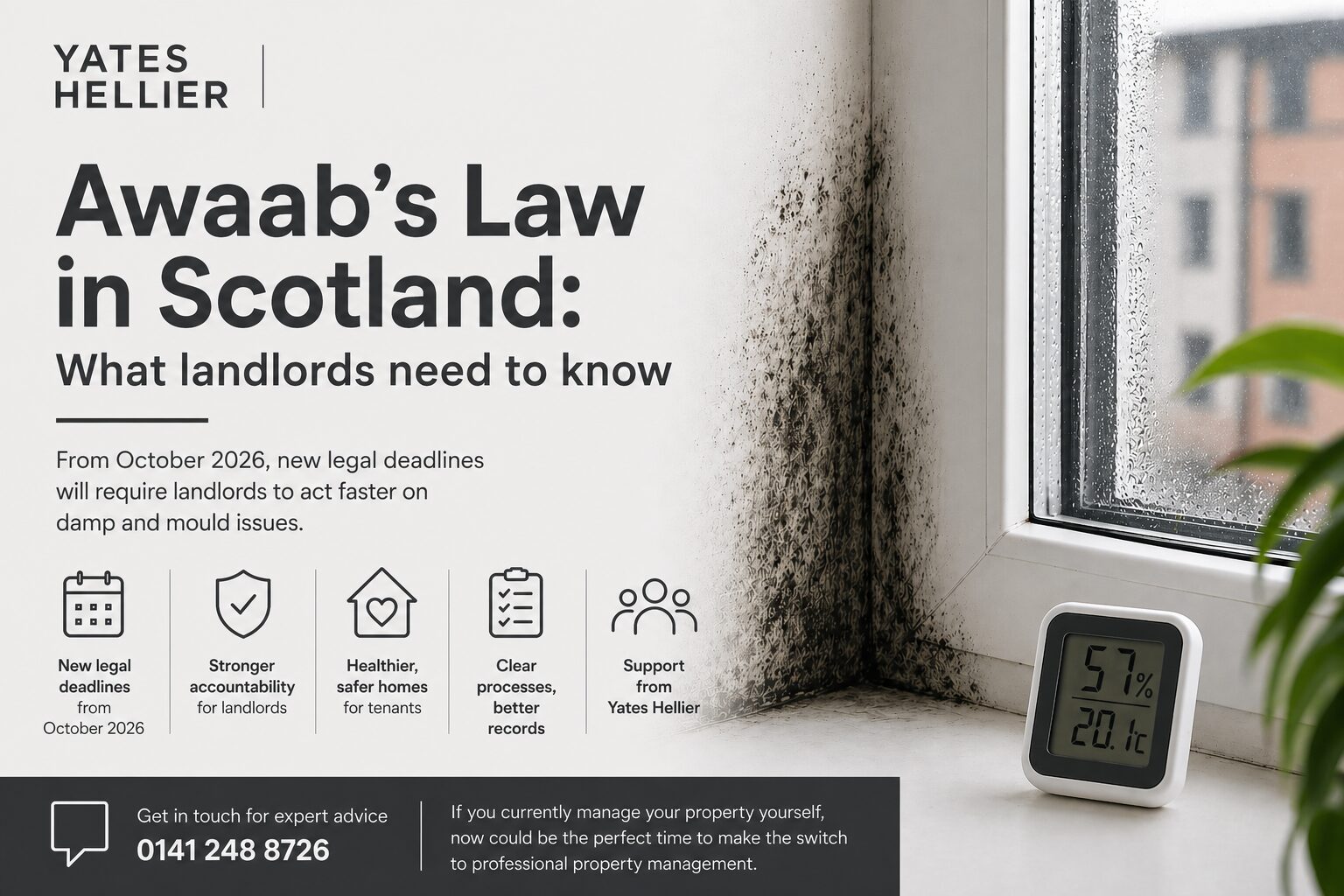
What is Awaab’s Law?
Awaab’s Law is named after Awaab Ishak, a two-year-old who died in 2020 after prolonged exposure to mould in his home in England. His death prompted major legal reform to ensure landlords deal properly and promptly with unsafe living conditions.
The legislation was introduced in England in 2025 to make sure tenants live in safe, healthy homes and that landlords act quickly when issues arise.
From October 2026, the law will come into force in Scotland. It marks a clear shift in how landlords must respond to problems like damp and mould. The scope may expand over time to include other housing hazards, following the phased approach seen in England.
For landlords, the message is straightforward. Speed and accountability are now legal requirements, not just good practice.
What is changing?
Under the new rules, once a landlord is notified of damp or mould, they must meet strict timelines:
- Investigate within 10 working days
- Provide a written summary within 3 working days of the inspection
- Start any required repairs within 5 working days
This introduces a far more structured and enforceable approach to property maintenance.
Why this matters
Landlords in Scotland already have obligations under the Repairing Standard. Awaab’s Law builds on this by introducing defined response times, making it much easier for tenants and regulators to identify when a landlord has failed to act.
In practice, delays alone can now create legal risk, even if the issue is eventually resolved.
Key risks for landlords
Failure to comply can lead to:
- Legal action or tribunal claims from tenants
- Regulatory scrutiny or enforcement action
- Compensation claims, particularly where health is affected
- Reputational damage, especially for larger portfolios or letting agents
Record-keeping is critical. If you cannot show that you acted within the required timeframes, you may be treated as non-compliant.
What landlords should do now
Preparation ahead of October 2026 is essential. Focus on the following areas:
1. Strengthen reporting processes
Make it easy for tenants to report issues and ensure all reports are logged immediately.
2. Act quickly
Put systems in place that prioritise inspections and repairs within the required deadlines.
3. Keep detailed records
Maintain a clear audit trail of reports, inspections, communication and completed works.
4. Address root causes
Treating mould is not enough. The underlying issue must be resolved, whether that’s ventilation, insulation or structural defects.
5. Review contractor arrangements
Ensure you have contractors who can meet short turnaround times.
The bottom line
Awaab’s Law moves property management towards a more proactive, time-sensitive model.
It is no longer just about fixing the issue. It is about how quickly you respond, and whether you can prove it.
How we can help
At Yates Hellier, we are already helping landlords prepare by strengthening compliance processes and raising property standards.
If you would like advice on how Awaab’s Law will affect your portfolio, get in touch with our team on 0141 248 8726. If you currently manage your property yourself, this may be the right time to consider professional property management.