
The story hehind Glasgow’s West End coach houses
By Jade Yates
Imagine standing on Belhaven Terrace Lane around 150 years ago, before the nearby cafés opened and long before cars lined the streets of the West End. A coachman, living in a coach house, would begin his day in a very different way. He would walk downstairs from his living quarters above, feed and groom the horses, prepare the carriage and wait for instructions from the family living in the grand townhouse nearby. Throughout the day he might carry them across the city for business, shopping or social occasions, before returning home to the coach house tucked away behind the terrace…
Belhaven Terrace Lane: Learning the Story of a Coach House
Every so often, a property comes along that sends you off reading about its history and imagining its story.
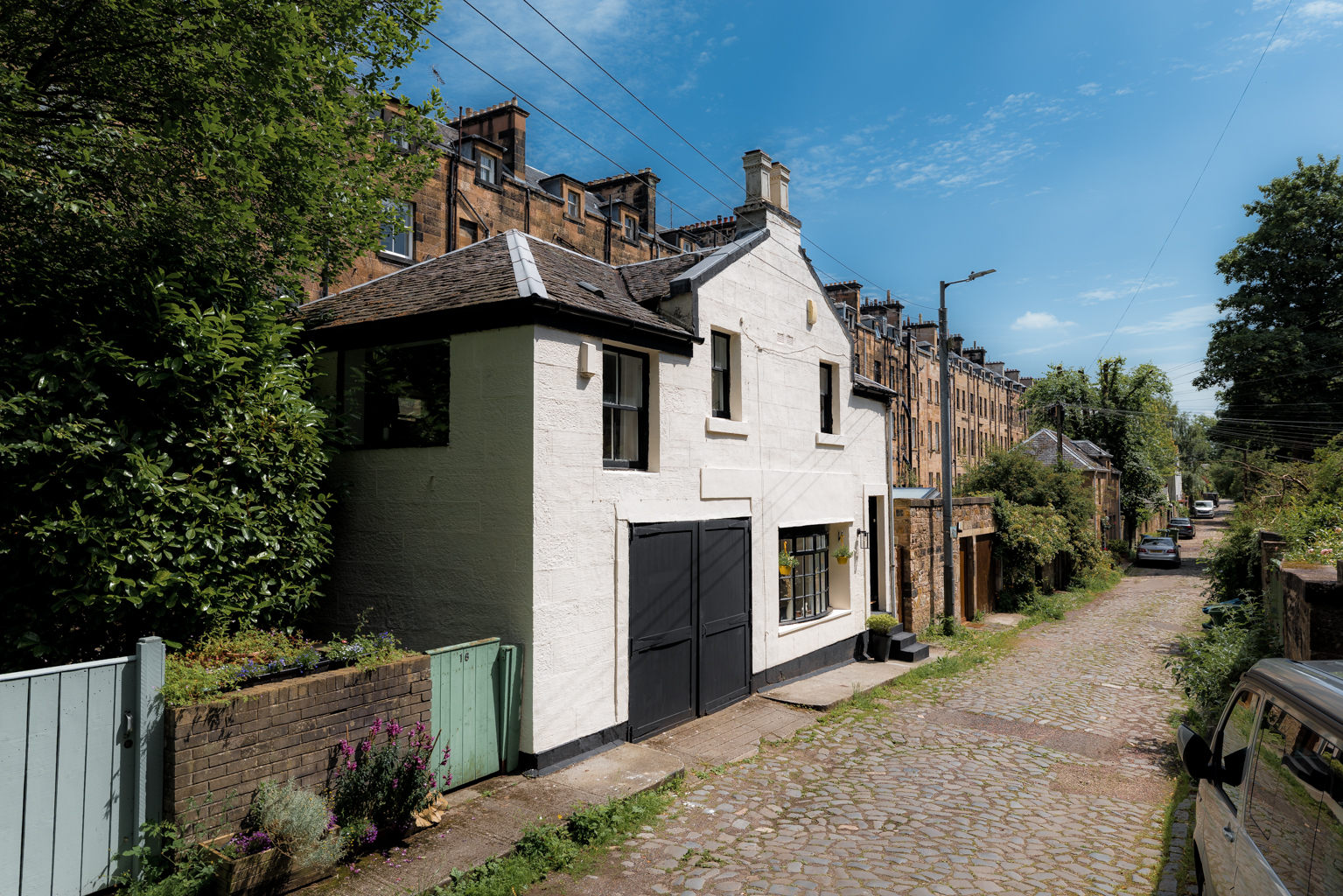
Recently, we had the pleasure of marketing a beautiful Victorian former coach house (also sometimes called a carriage house) on Belhaven Terrace Lane in Glasgow’s West End, which is now under offer.
Naturally, while putting together the marketing details, I found myself reading about the history of coach houses.
I’d always known the mews houses of the West End were unique. They’re few and far between, tucked away behind some of the grand terraces, and they don’t come on the market very often. And the more I read about their history, the more charming they have become.
Before They Were Homes
West End lanes like Belhaven Terrace Lane weren’t ever an afterthought. When much of Glasgow’s West End was being built during the Victorian period, houses on streets like Belhaven Terrace in Dowanhill were home to wealthy merchants, lawyers, doctors and business owners. Many travelled by horse and carriage, so they needed somewhere to keep both the horses and the carriage itself. That’s where coach houses came in.
The same setup shaped the mews of London’s Belgravia and Mayfair. Glasgow’s West End, built by the same kind of merchant money at more or less the same moment in the city’s story, borrowed the idea almost exactly.
Built behind the main houses, in this case the grand townhouses of Belhaven Terrace, and accessed by narrow lanes, coach houses such as this one built in the early 1870s, were practical outbuildings rather than family homes.
Traditionally, the ground floor of a coach house would have housed the horse stables and provided storage for carriages and equestrian equipment, while the upper floors would have served as the hayloft and the living quarters for the coachman and his family.
The irony is, the historical view of these sought-after homes, held by the likes of a merchant family, was that the coachman and stable staff couldn’t be at the front of the house beside the “good address”. The coach house was positioned round the back, on a service lane the family’s visitors would never have to see, hear or smell.
The grand terraces may have been the centre of family life, but the coach houses quietly kept everything moving behind the scenes.
A Different Chapter
The coach house’s working life didn’t last much past the early twentieth century. Cars arrived, horses stopped being a daily necessity, and after two world wars, far fewer households could afford a coachman. Some coach houses sadly got demolished, some became garages or workshops, while others were left unused for years.
It’s only in the last few decades that buildings like this one on Belhaven Terrace Lane have found a second life, this time as homes in their own right. Their original purpose is still easy to spot. Among this home’s original features are the large coach house doors and the low first-floor window used to load hay directly from the lane below.
Why They’re Still So Popular
Again, ironically, the very thing that made a coach house a suitable coach house historically (hidden from the street, tucked away, private, self-contained) is exactly what makes people living in the West End fall for them now.
Part of the appeal is that no two coach houses are the same. Most were built to suit the space available behind the main terrace, so they tend to have their own layouts and little quirky details that make them feel individual, which is why, of course, they continue to attract so much interest whenever one comes on the market.
Looking at Belhaven Terrace Lane Differently
Working with the Belhaven Terrace Lane mews house made me appreciate these buildings even more than I did before. Once you take the time to delve into the history and picture it as a working coach house more than a century ago, you start to see it a little differently and really appreciate its story.
It makes you wonder how many people have called this house home over the years. From housing horses and carriages to becoming family homes, these buildings have adapted with the city around them while still holding onto the lovely features that tell you where they came from.
Historic Mews Lanes Across Glasgow’s West End
Belhaven Terrace Lane isn’t the only historic mews lane still standing in Glasgow’s West End. Almost every major Victorian crescent has a lane running directly behind it. Once you know their history, you’ll start to notice more of these lovely converted mews houses tucked away as you walk around the West End, each with its own version of the same story.
Some former coach houses have taken on a very different second life, with several of the West End’s bars and restaurants, on the likes of Ashton Lane, now operating out of what were once Victorian stables and coach houses. So the next time you’re enjoying a drink on a wee cobbled lane, you might just find yourself imagining what it would have been like 150 years ago.
How We Can Help
As a small independent estate agency, we believe that every property deserves a thoughtful approach, and attention to detail is what we’re known for.
If you’re considering selling your home and are looking for an agency that will take the time to discover its history and hear its story, contact our sales team on 0141 248 8726, or fill out the form below. We’d be delighted to hear from you.